17th century beginnings
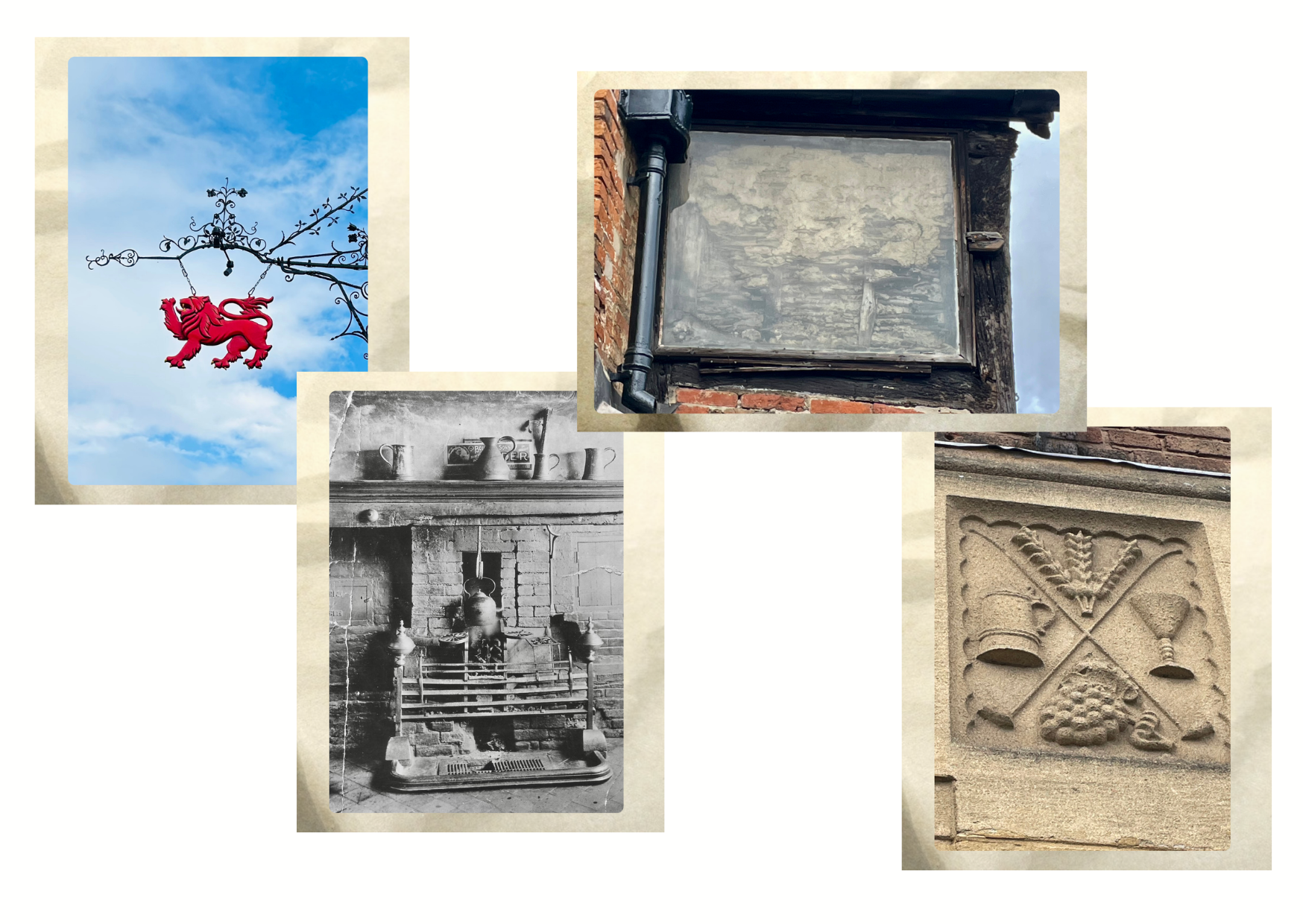
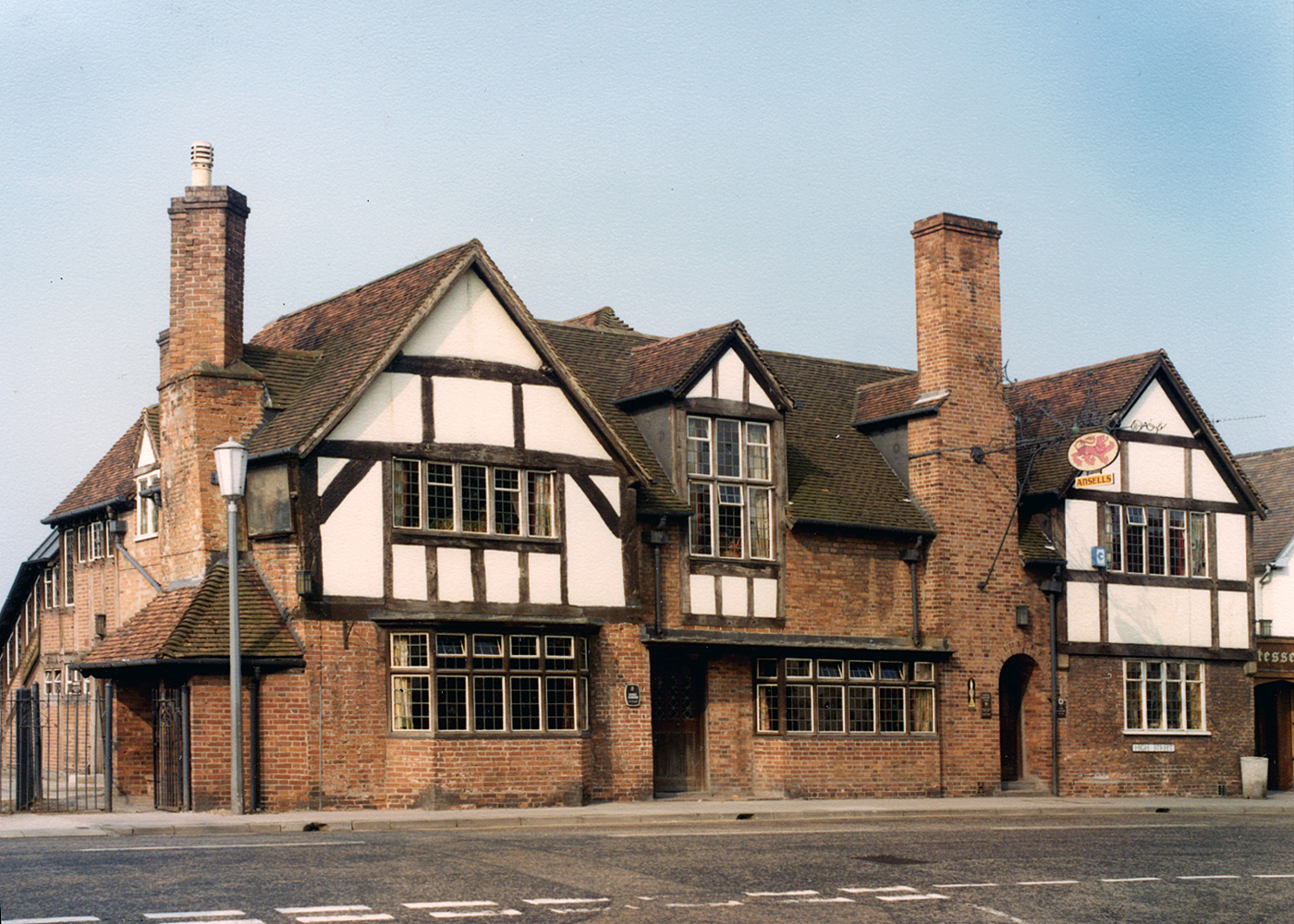
The timbered framed Red Lion was built in the early 17th century and had since been extensively renovated. A section of the original wattle and daub construction can be seen high up on the external south wall. Inside there is an original 17th century fireplace.
John Wesley, the founder of Methodism, once preached in the yard of the Red Lion. He was not favourable in his estimate of the people of Knowle; he referred to them as ‘ungodly and much given to drunkenness.’
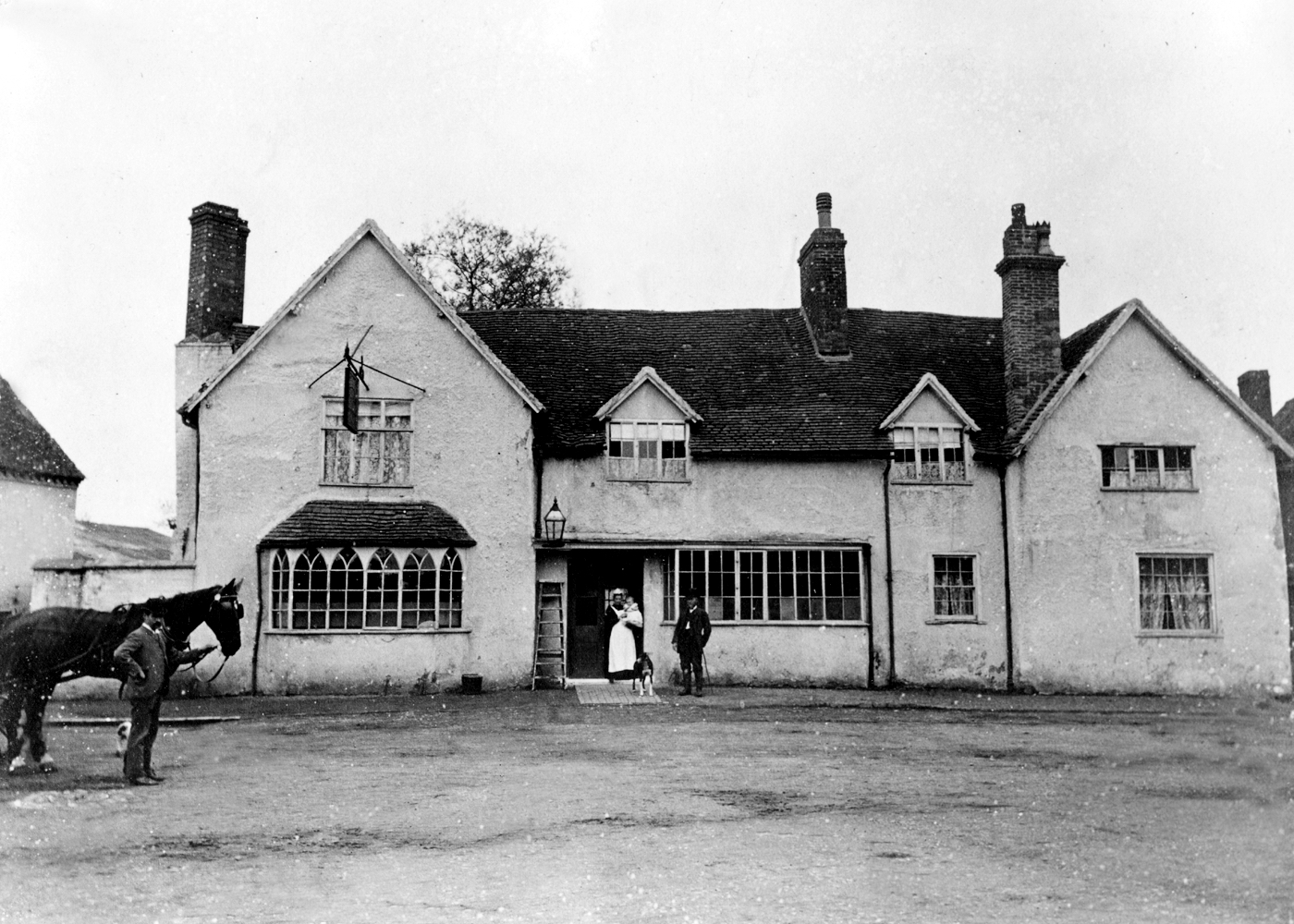
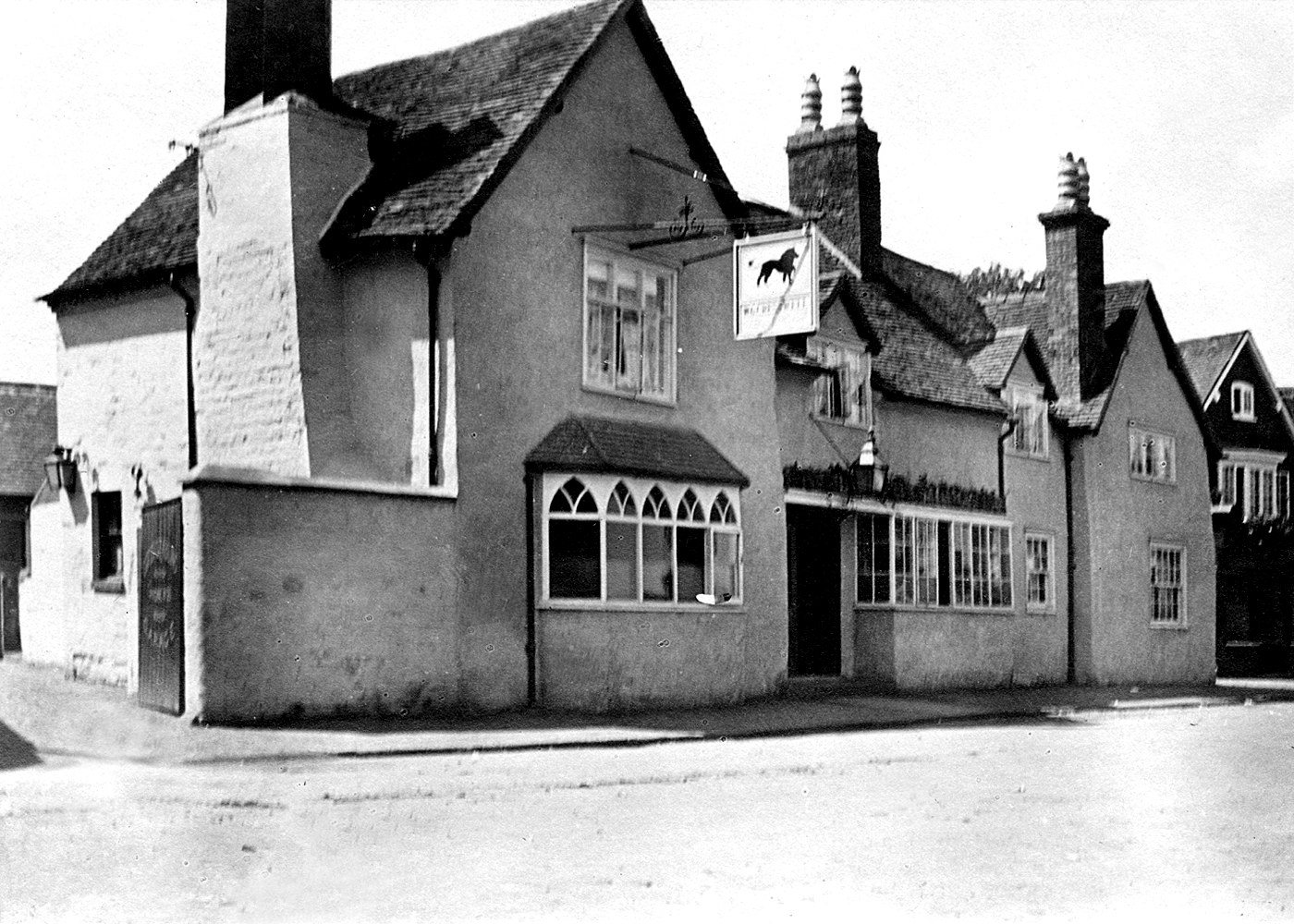
Like many old properties, the timber façade was plastered over during the Georgian era but over the 1930s an extensive restoration was undertaken and the rendering on the front was removed and the timbers repaired or replaced. Early photographs record the extent of the earlier outbuildings, fields, gardens, and a bowling green.
Community Gatherings
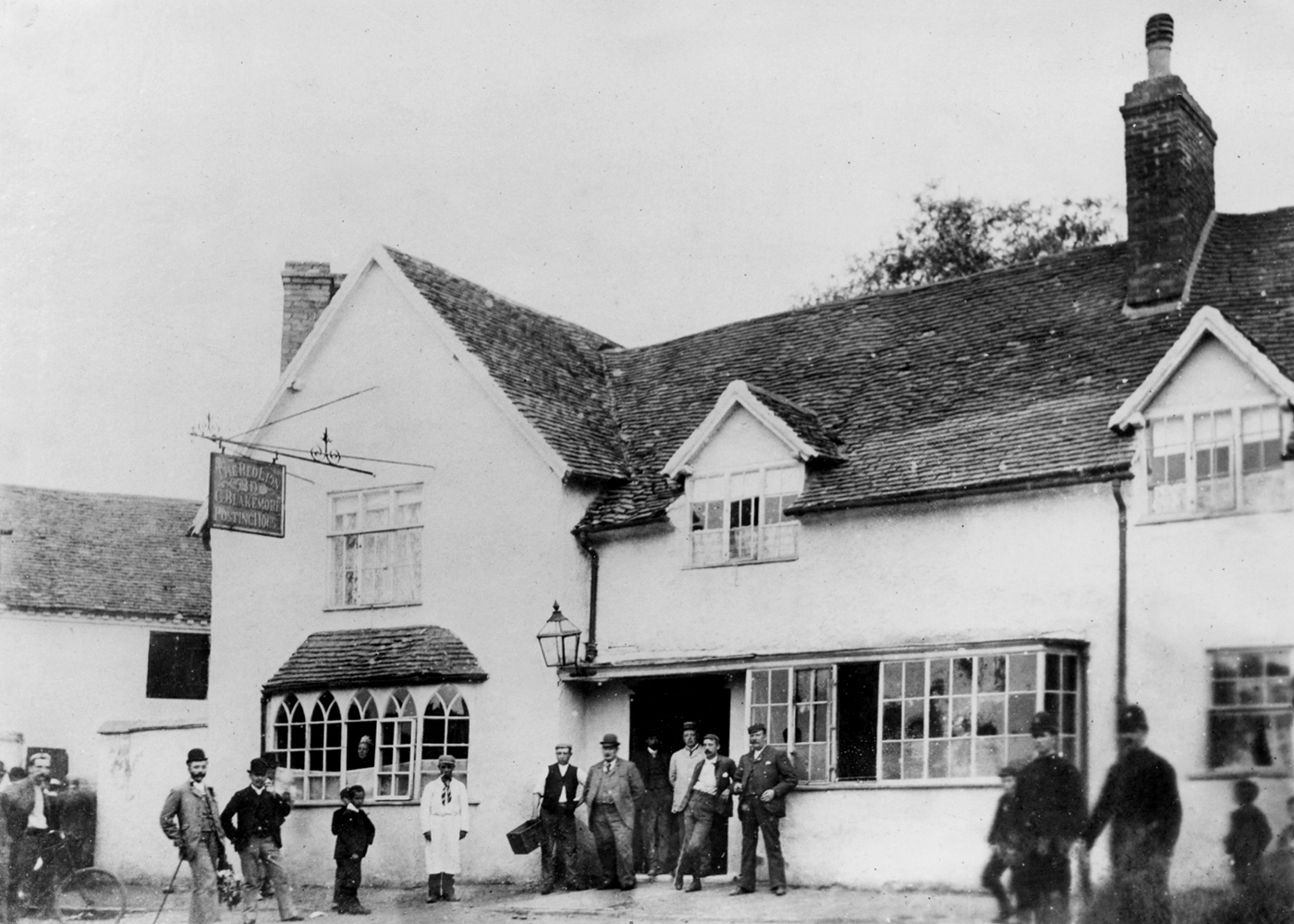
A popular local hostelry across the centuries, the Red Lion flourished during the growth of coach travel and the inn, yard and fields were home for meetings, outings to the races, and annual celebrations such as the Odd Fellows Annual Parade and Fair.
Mr. Taylor remembers ox roasts being held in the Lion yard at Christmas. “The villagers would come with their plates at dinner time. The ribs were 2d each and people brought jugs for the “dripping” Others remember an ox roast as part of the 1919 peace celebrations.
As well as providing Red Letter Days, the Red Lion provided a place for the villagers as well as a place to meet, drink, chat or play bowls.
Neighbouring Swan Inn
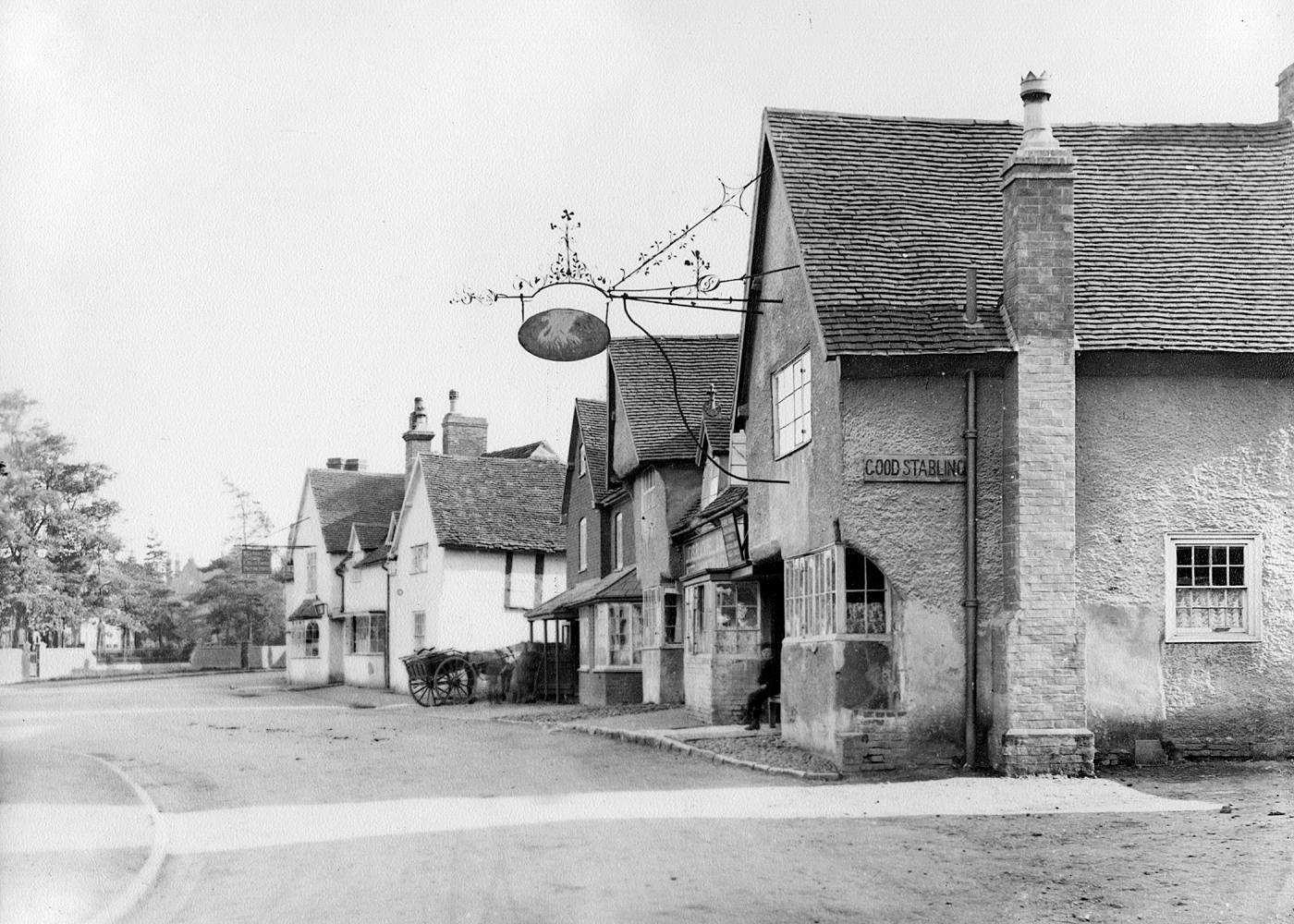
The beautiful wrought iron sign hanging high above the high street advertising the Red Lion once belonged to the [now demolished] nearby 15th century White Swan Inn. For many centuries the two Inns appeared to thrive side by side and the village was sad to see it demolished just before the second world war. A plaque on the replacement building reads “The site of the Swan Inn demolished in 1939”. There are also two motifs – one of a swan and another of barley, grapes, a tankard and a wine glass. The area behind the building is still known as Swan Yard.
Local fire brigade and other uses
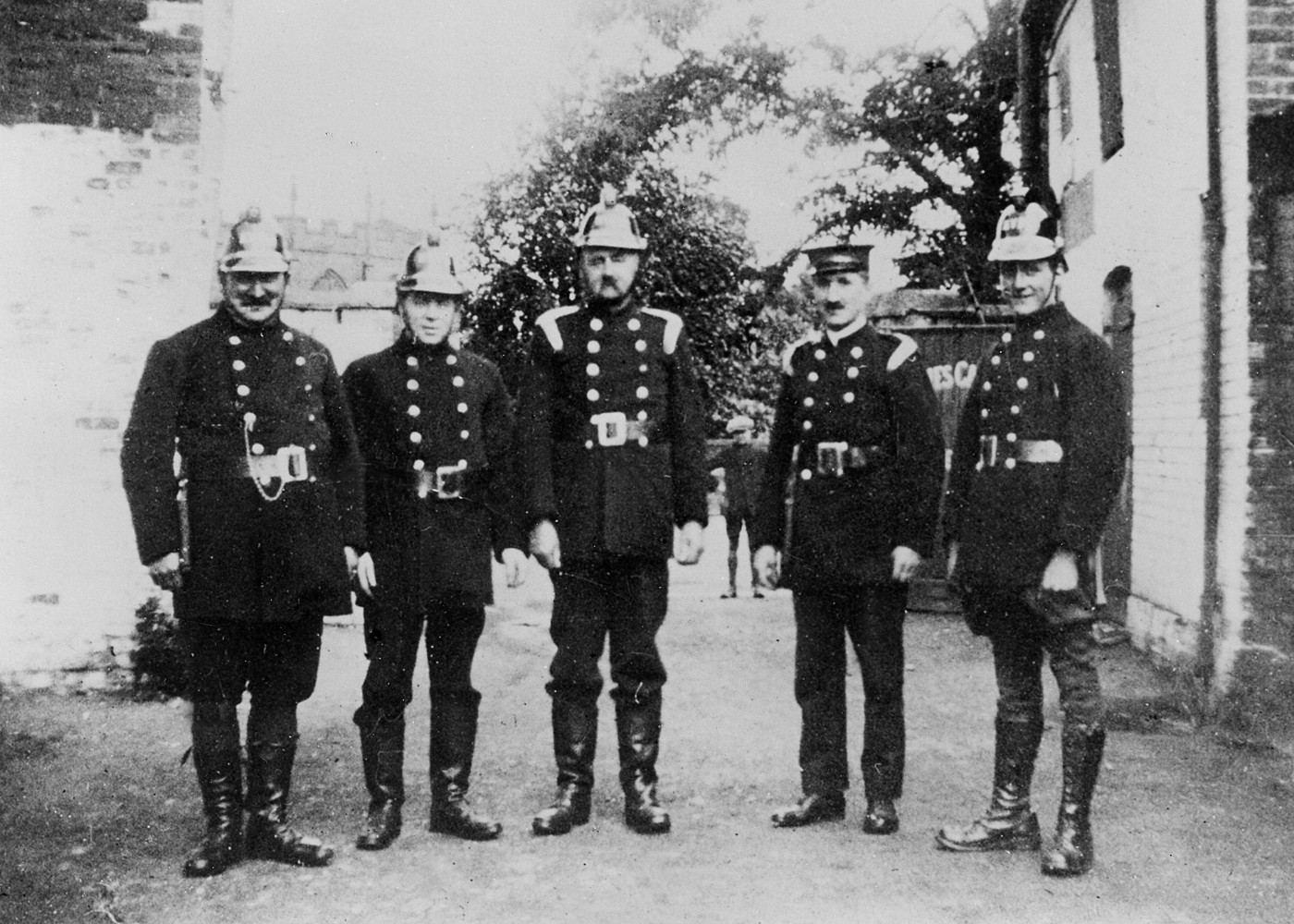
The yard and out-buildings were also the early home of the fire brigade. The crew were local men and when the alarm was raised, the men would assemble at the Red Lion. The yard was also the venue for crockery sales and a home for a traveller’s caravan.
20th Century
The Pub was known as the Red Lion for most of its life apart from 1995-2001, when it was renamed the ‘Fellon and Firkin’ by the Firkin pub chain who briefly owned it. The locals continued to use the name ‘Red Lion’ or just the ‘Lion’!
21st Century
The pub was sensitively refurbished in 2025, and after a few years of missing the hanging pub sign, the Red Lion sign was refurbished and rehung, once again a beautiful feature of Knowle High Street.
Distinguishing Features
- A section of the original wattle and daub construction can be seen high up on the external south wall
- Original 17th century fireplace to the left of the entrance
- A beautiful wrought iron sign above the high street that once belonged to White Swan Inn.
- Look for a plaque on the replacement building, “The site of the Swan Inn demolished in 1939. And the motifs – one of a swan and another of barley, grapes, a tankard and a wine glass
- The blue plaque denoting the Grade II listing
Timeline
- 1600s: The Red Lion was built
- 1749: John Wesley preached in the yard
- 1700s / 1800’s: It is believed that sometime between 1714 & 1837 the timber façade was plastered over
- 1930s: Major renovations and timber facade exposed
- 1939: The neighbouring Swan Inn demolished and the sign was transferred to the Red Lion
- 1948: A bowling green, laid by Ansell, to replace the one lost when the White Lion was demolished. This bowling green lasted until the 1990s
- 1995: Renamed as the Felon & Firkin
- 2001: Renamed the Red Lion
- 2025: Undergone internal refurbishment
Image Gallery
You will be able to see more images of Knowle in the Local History Centre located upstairs in Knowle Library.
Explore the Trail
There are twelve buildings to explore on this trail.
The small print
While every effort has been made to ensure the accuracy of the information presented on this heritage trail, details may be subject to change or interpretation. To the best of our knowledge, all content is correct at the time of publication. We accept no responsibility for any errors, omissions, or changes that may have occurred since.