1800s
This building stands on the site of a purpose-built blacksmith’s yard and cottage, built in 1800.
The site became vacant around 1884 after the collapse of the John Cogbill & Robert Beryfield Woodfield blacksmith’s business. It was bought by William Wakefield.
A place for recreation
During the 19th century, there was a growing interest in education for the working man together with a desire to replace the pastime of drinking and gambling in pubs with other activities. In Knowle, George Everitt of Knowle Hall and the Rev. Canon Howe recognised the impact that Institutes were having on the lives of working men in other areas. Canon Howe was particularly interested in the provision of Reading Rooms to improve literacy skills and he was keen to contribute to general education.
Together, they thought the provision of a Men’s Institute in Knowle would be beneficial, but the lack of suitable premises was a stumbling block.
When a former blacksmith’s yard and cottage opposite the Greswolde Arms became vacant, a tenancy was agreed with the owner William Wakefield and plans drawn up by architect Mr Herman. The Institute had an assembly room in the single storey building, and a reading room. A caretaker’s apartment was in the cottage.
The Institute opened in 1886 and offered many local men and youths’ education, relaxation and sporting opportunities for over 60 years. The main objective of the Institute was, as George Everitt quoted on the opening day, “To elevate and improve the minds of the men who come here and the youths who would be the men of the Future and he hoped it would provide industry, integrity and sobriety among them”
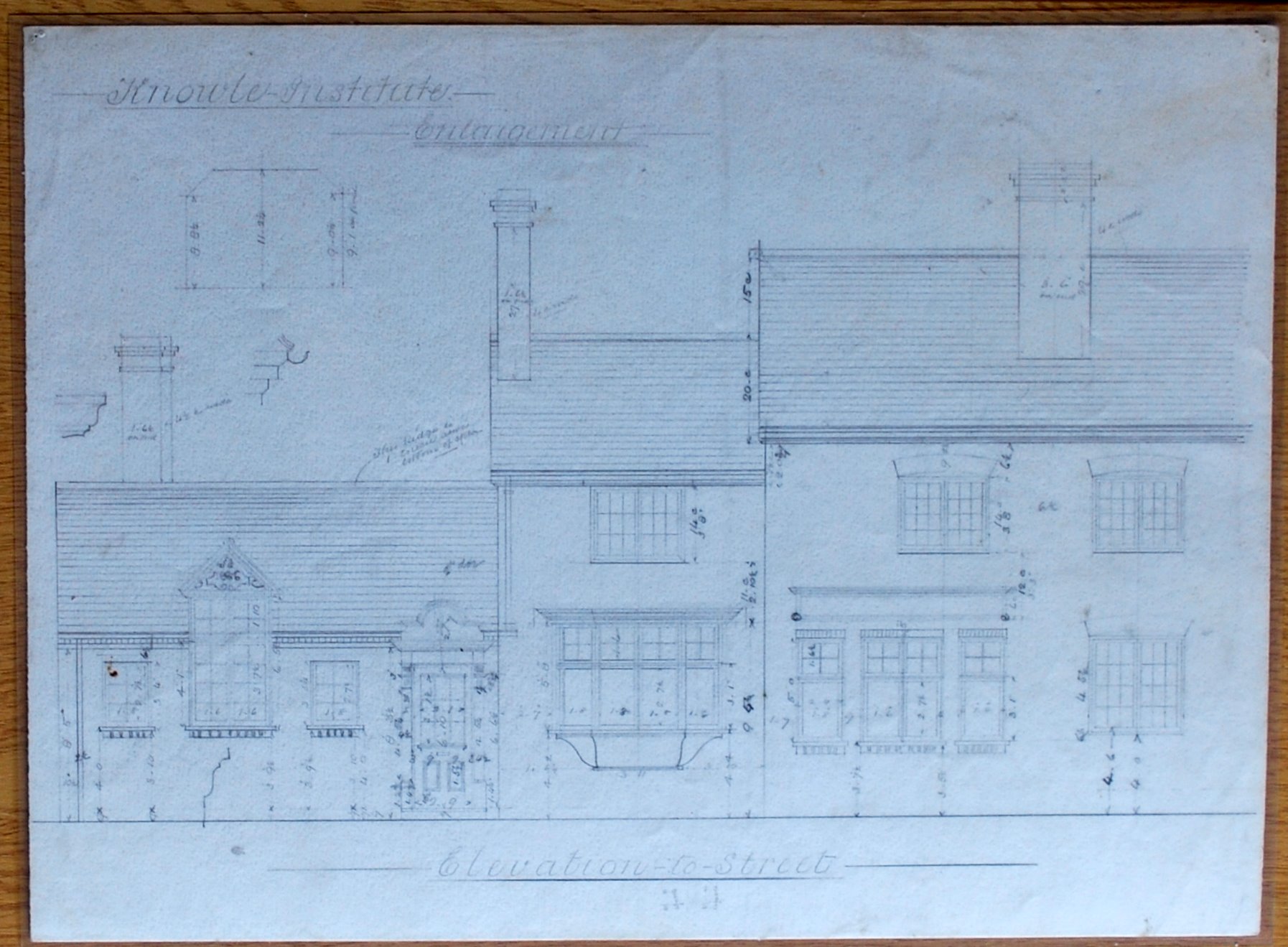
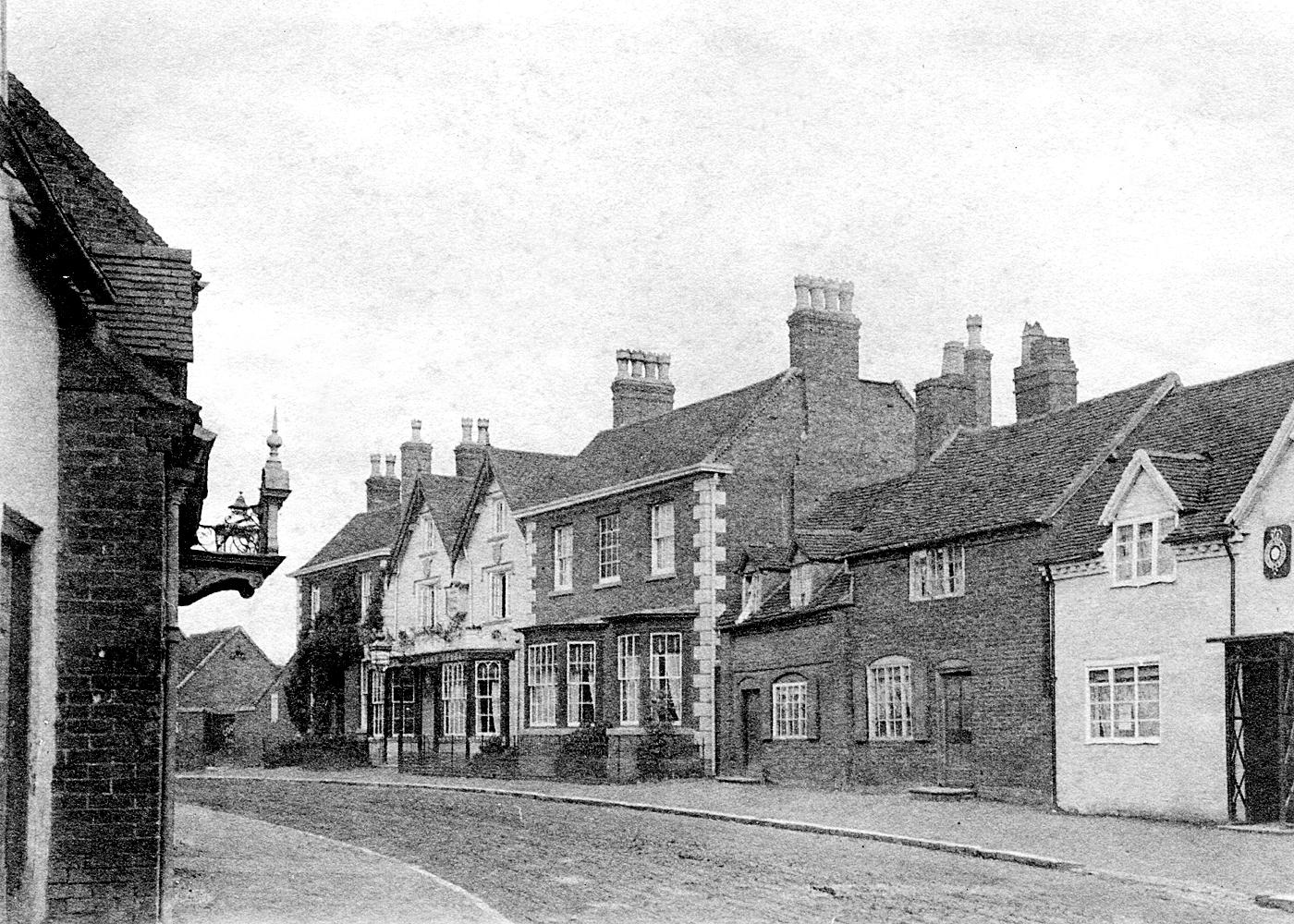
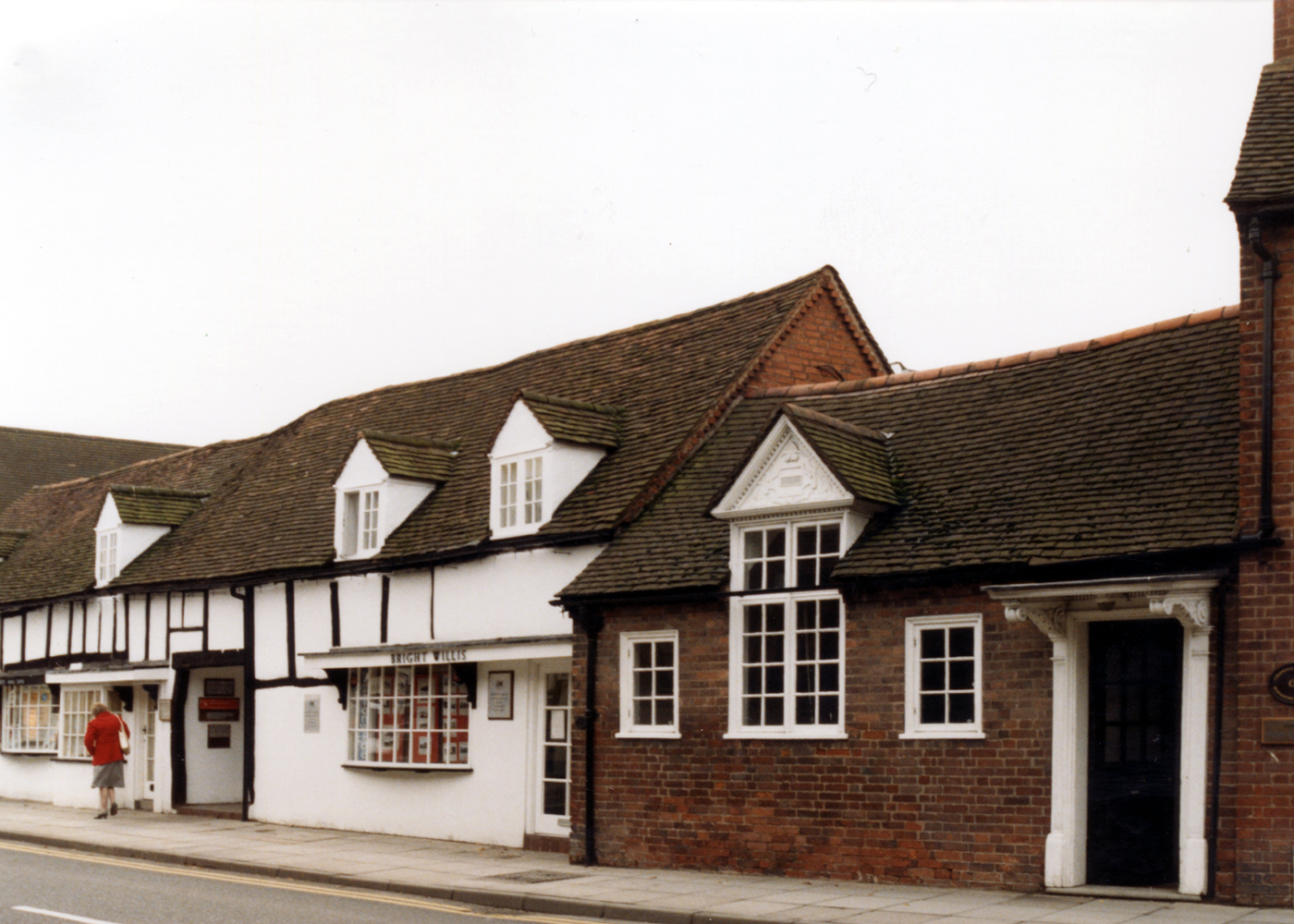
The new single building made an attractive addition to the High Street with the large window designed to give light into the assembly room. The intricate and ornate canopy above the entrance is still there today.
The building was rented until 1904 when donations and funds raised from membership fees funded the purchase of the building and the extensions.
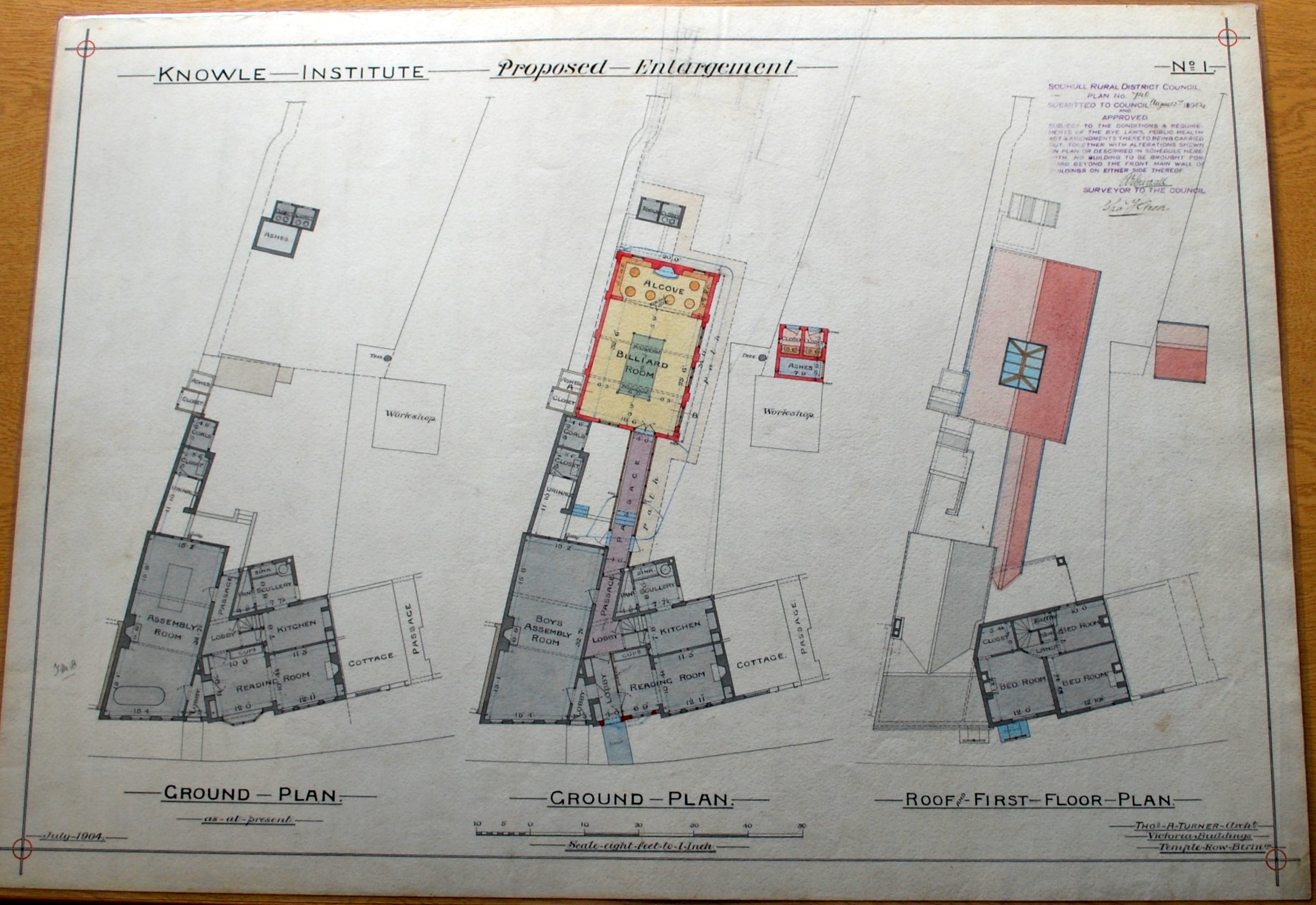
The Institute was popular and by 1904, further funds had been raised (with significant donations from local benefactors), to buy the freehold and fund extensions to provide additional recreational and sporting facilities. The plan shows the original 1886 floor plan and the proposed 1905 extension to provide space for a billiard room. 1910 saw further extensions and additions. The billiard room was extended to add a card room and committee room. Outside additions included a shed with space for 50 bicycles. These additions were appreciated but, by far, the most popular 1910 addition was a timber building housing a shooting range. Many villagers competed for the shooting cups and awards.
The War Years
During the Second World War, the institute held many fundraising events with whist drives being very popular. These helped to raise valuable funds for those serving in the forces. The building also served as a canteen for all service men and women, including American soldiers.
Changing with the times
The Institute was a great success and for many years became central to the social and sporting life of the village. However, during the 1950s and ‘60s alternative venues were built and these provided modern facilities for many social activities. People were also changing how they used their recreation time. The decision was taken to close the Institute and convert the original institute building facing the high street into business premises and the assembly room at the rear into the renamed Downing Hall.
21st Century
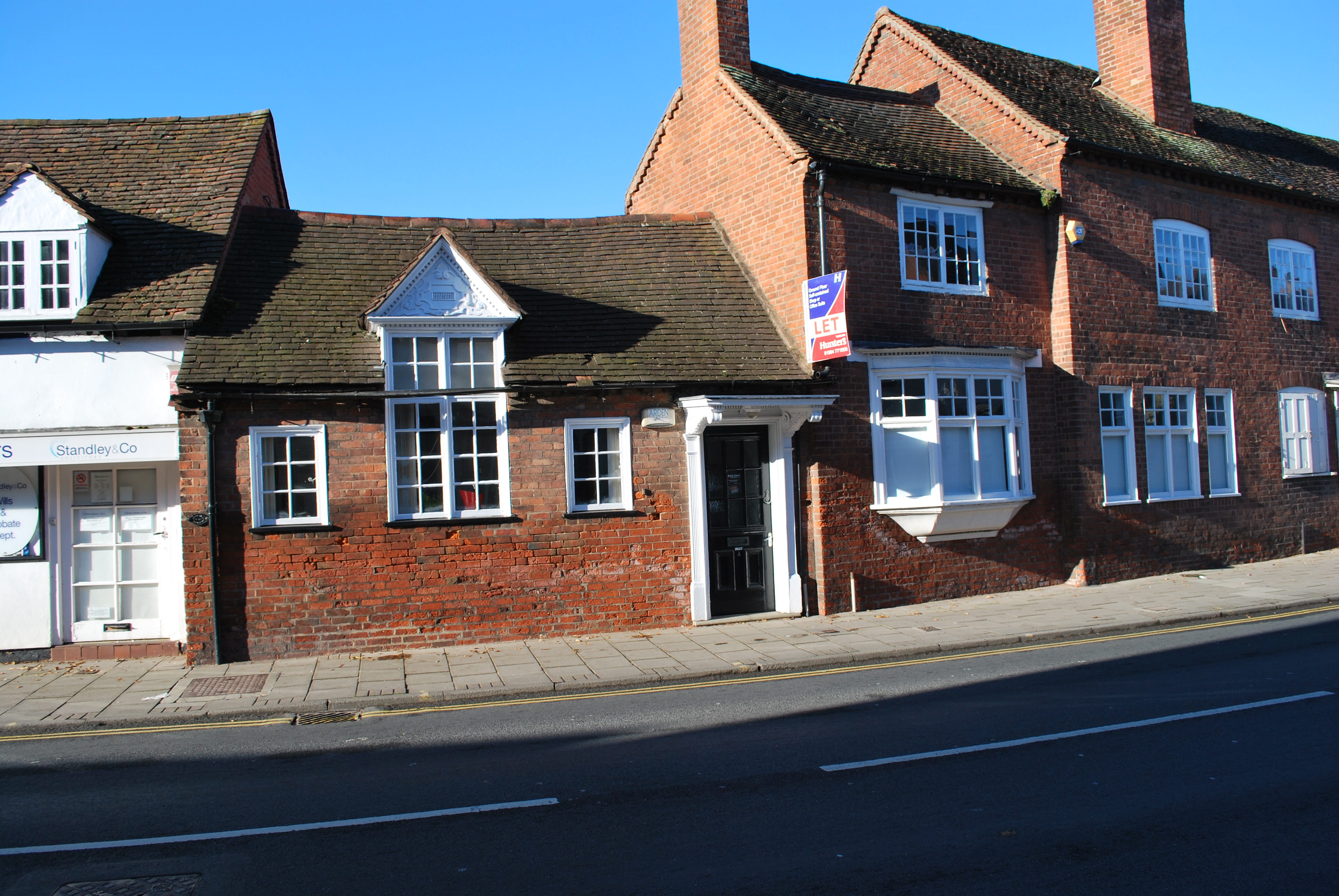
For many years, the High Street facing building has served as offices. Since the 2020’s, the units have been shops.
Distinguishing Features
- The large window designed to give light into the assembly room
- The remains of the intricate and ornate canopy above the entrance
- The outline of the original cottage, considerately extended to echo the curve of the High Street
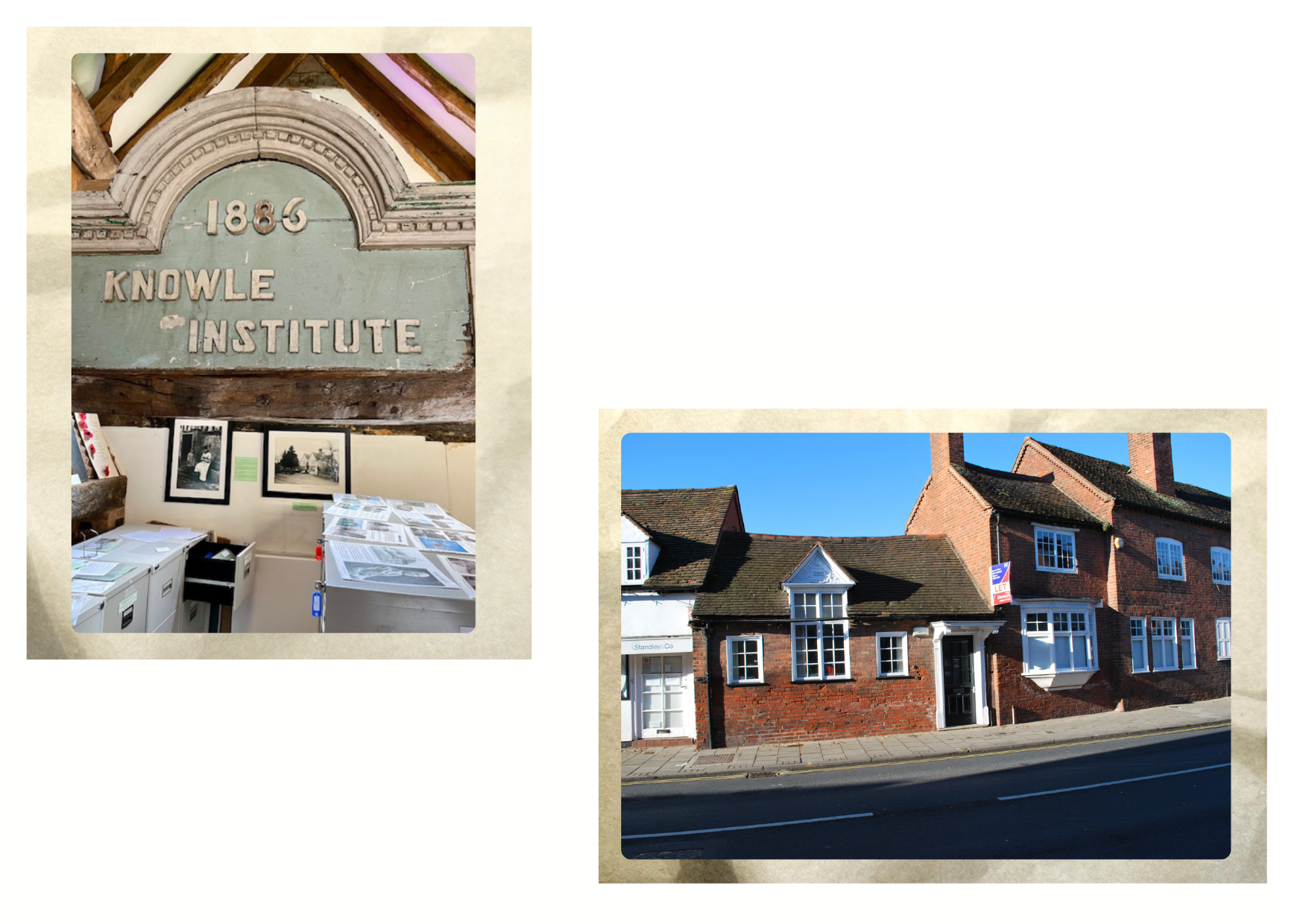
- The original 1886 plaster Institute sign can be seen upstairs in the library
Timeline
- 1800: Purpose built Blacksmith’s yard and cottage
- 1841: John Cogbill became the Blacksmith here
- 1841: The building was bought by William Wakefield, who much later agreed the tenancy for the Institute
- 1884: The yard and cottage became vacant after the collapse of the John Cogbill & Robert Beryfield Woodfield blacksmith’s business
- 1885: The tenancy agreement for the Institute was agreed with William Wakefield
- 1885: Fundraising commenced for the Institution
- 1886: Men’s Institute opened
- 1905: Men’s Institute was extended with new outside tables, billiard room and committee room
- 1910: Further extensions were made, enlarging the billiard room, rifle range, and the construction of a bicycle shed large enough for 50 bicycles
- 1916 -1918: Approximately 139 institute members served in the forces and 19 men gave their lives. The Institute raised funds for the ‘comfort to soldiers fund’, and for the Red Cross
- 1935: The reading room became home to the public library
- 1940-1945: Many fundraising activities took place. The Institute moved from a ‘members-only club’ to a community venue for many clubs and activities for both men and women
- 1941-1945: The building served as Knowle Forces Canteen for all servicemen and servicewomen
- 1960s Institute closed the the building converted to offices and Downing Hall
- 2020s Front offices converted to shops
Image Gallery
You will be able to see more images of Knowle in the Local History Centre located upstairs in Knowle Library.
Explore the Trail
There are twelve buildings to explore on this trail.
The small print
While every effort has been made to ensure the accuracy of the information presented on this heritage trail, details may be subject to change or interpretation. To the best of our knowledge, all content is correct at the time of publication. We accept no responsibility for any errors, omissions, or changes that may have occurred since.