Introduction
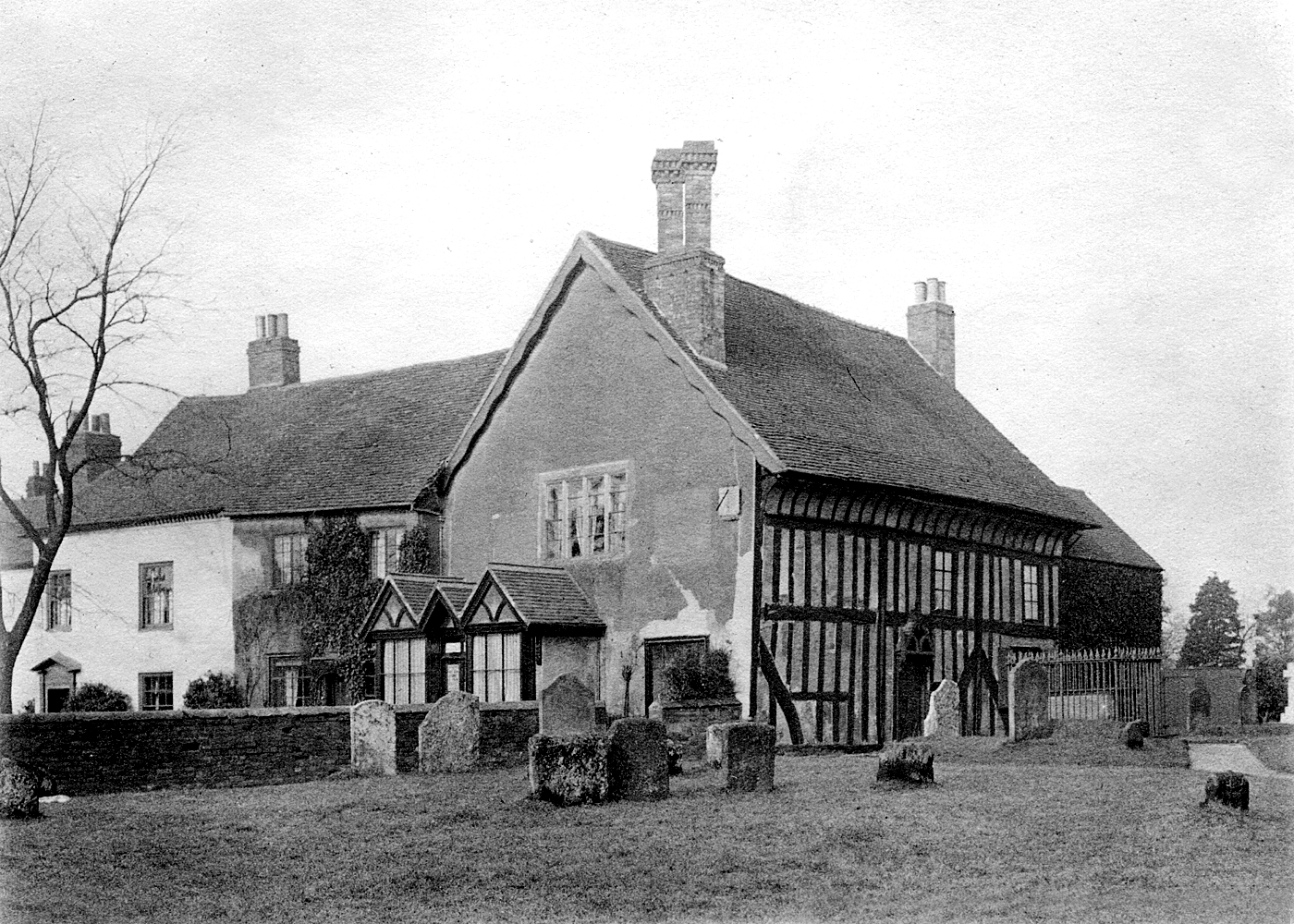
The 15th century timber framed Guild House was the home of the Guild of St Anne. The Guild was a religious society who provided support to those in need in the community. Once again, today, the Guild House serves the community as part of Knowle Parish Church. The building is Grade 2 Listed.
The Guild of St Anne and the College of Knowle
In 1413, the King granted Walter Cook a license to found in Knowle a fraternity and guild in honour of God and of St Anne. The Guild raised its finances from membership fees, donations and rents from the land and property it owned. At its height it had over 3,000 members, including local residents and most of the local gentry: The Lucy family of Charlecote, the Ferrers family of Baddesley Clinton, the Featherston family of Packwood and some of the Shakespeares.
In 1416, Walter Cook went on to found the College of Knowle which provided a communal life for the priests. This was an expensive undertaking for Walter Cook, for which one needed to be very rich. This was the year after Agincourt (a significant English victory during the 100 years war) and King Henry V was short of money, leading him to borrow from a lot of rich churchmen. Walter Cook lent him £333. We don’t know if he was repaid!
The Reformation
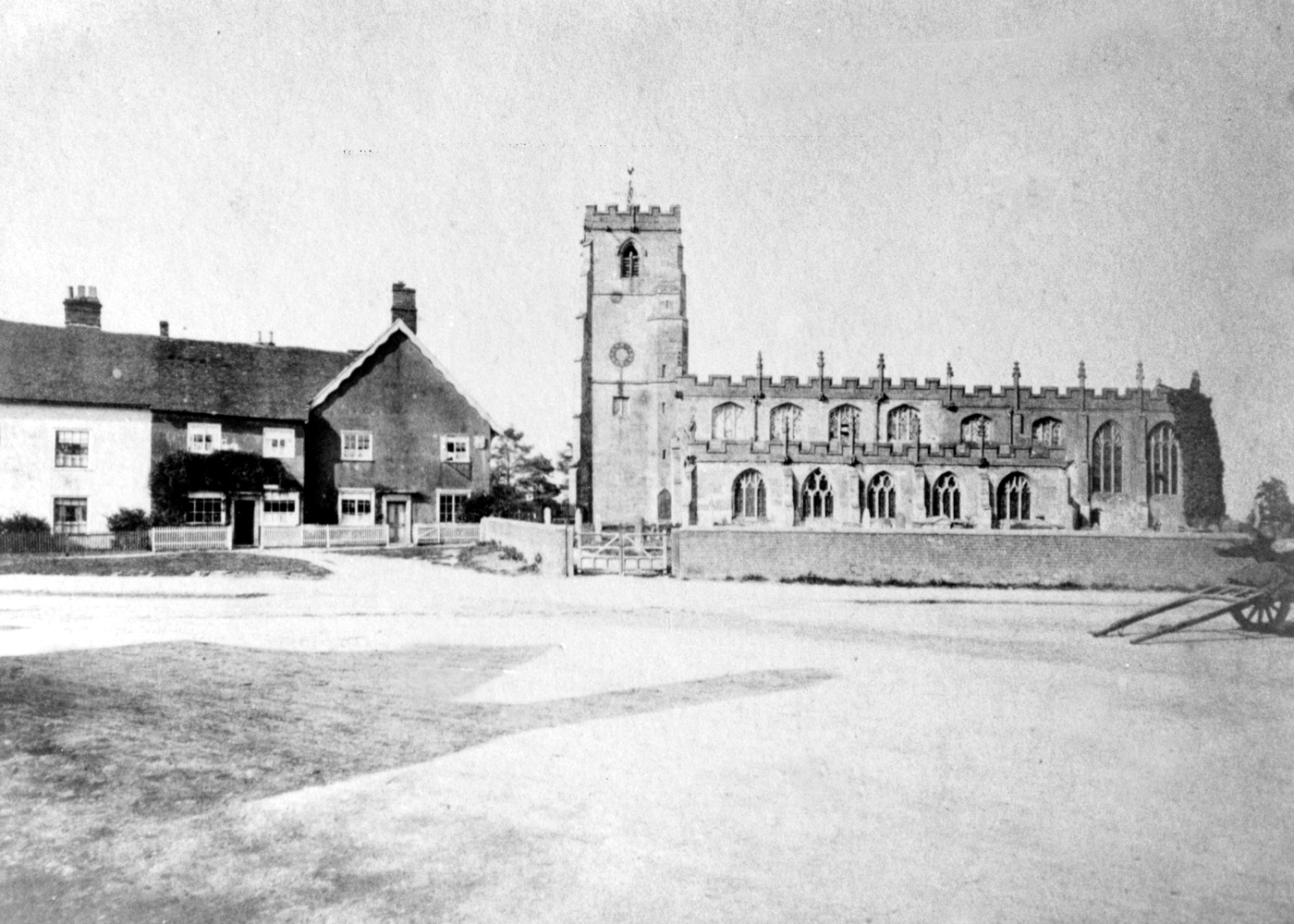
Both the Guild and College were dissolved in 1547 during the Reformation when the Guild House was confiscated. (The English Reformation was a period from the 1530s to 1600 when the Church of England broke from the authority of the Catholic Church, during the reign of King Henry VIII and his successors. During this period, monasteries were dissolved the Church of England was established). The Guild House buildings originally extended as far as the pharmacy and included Monastery House and St Annes Cottage. It was sold in 1550 to two London merchants and eventually converted into private houses. Miraculously the second Guild register (1451-1535) survived and is now in Birmingham Library.
Residents of the Guild House
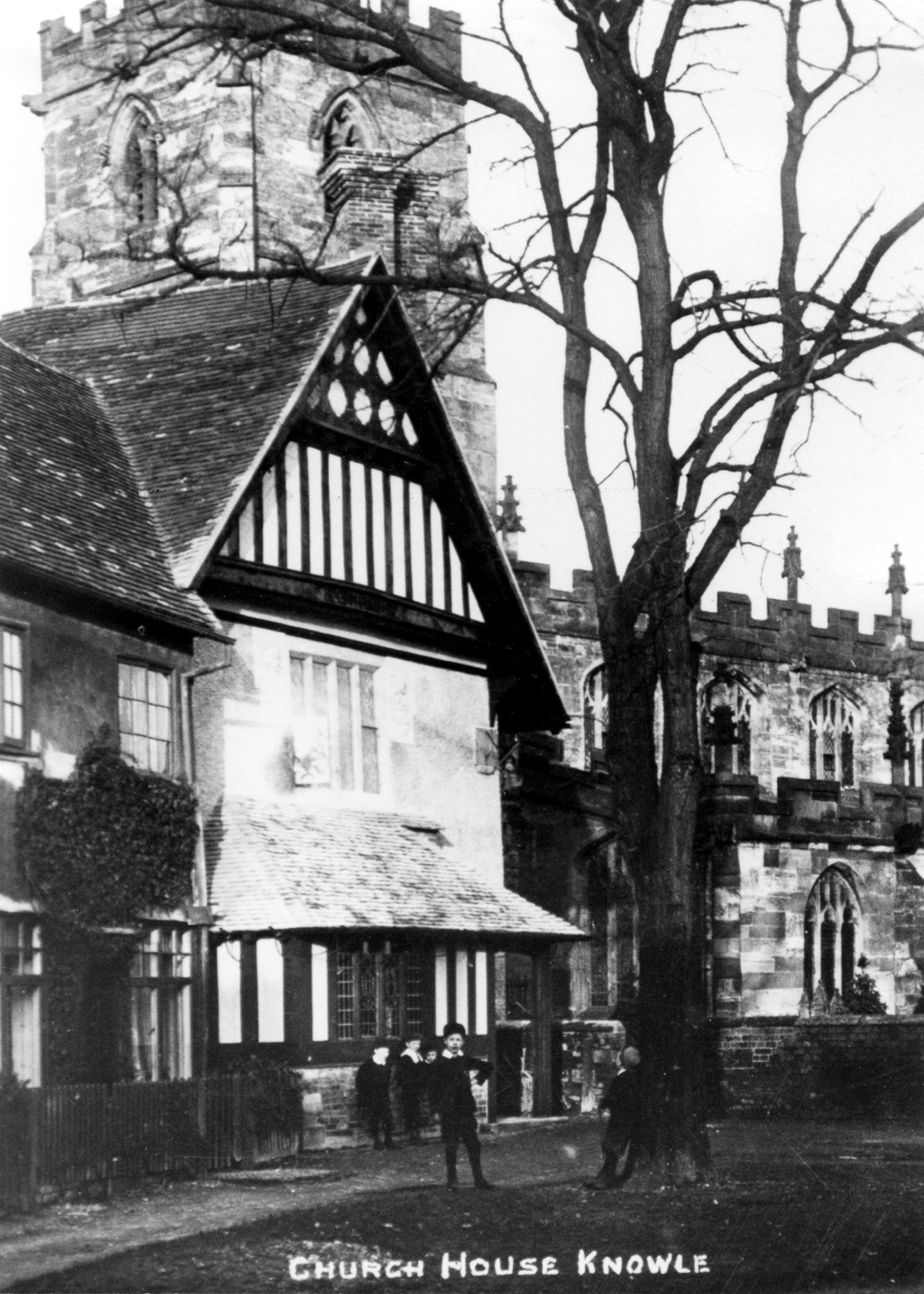
In the 18th century it was occupied by Theophilus Boston and in 1816 by William Boston. Later it was owned by Mrs Power and then by Mr Brierley who converted the Guild into a shop in 1873 and for a time it was also the post office. Around 1900 it was a drapers shop and sold newspapers. In 1911 Mr. George Jackson of Springfield House bought it anonymously, together with the forecourt and St Anne’s cottage. He had it completely restored and gave it back to the church in 1912. It was not until his death in 1948 that the donor’s name became known.
Second World War: A Place of Refuge
In the winter of 1940-1941 people from the heavily bombed areas of Coventry, Bordesley, Alum Rock and Saltley slept at the Guild House during the nightly bombing raids.
In 1944, American servicemen stationed locally used the Guild House for recreation.
21st Century Use
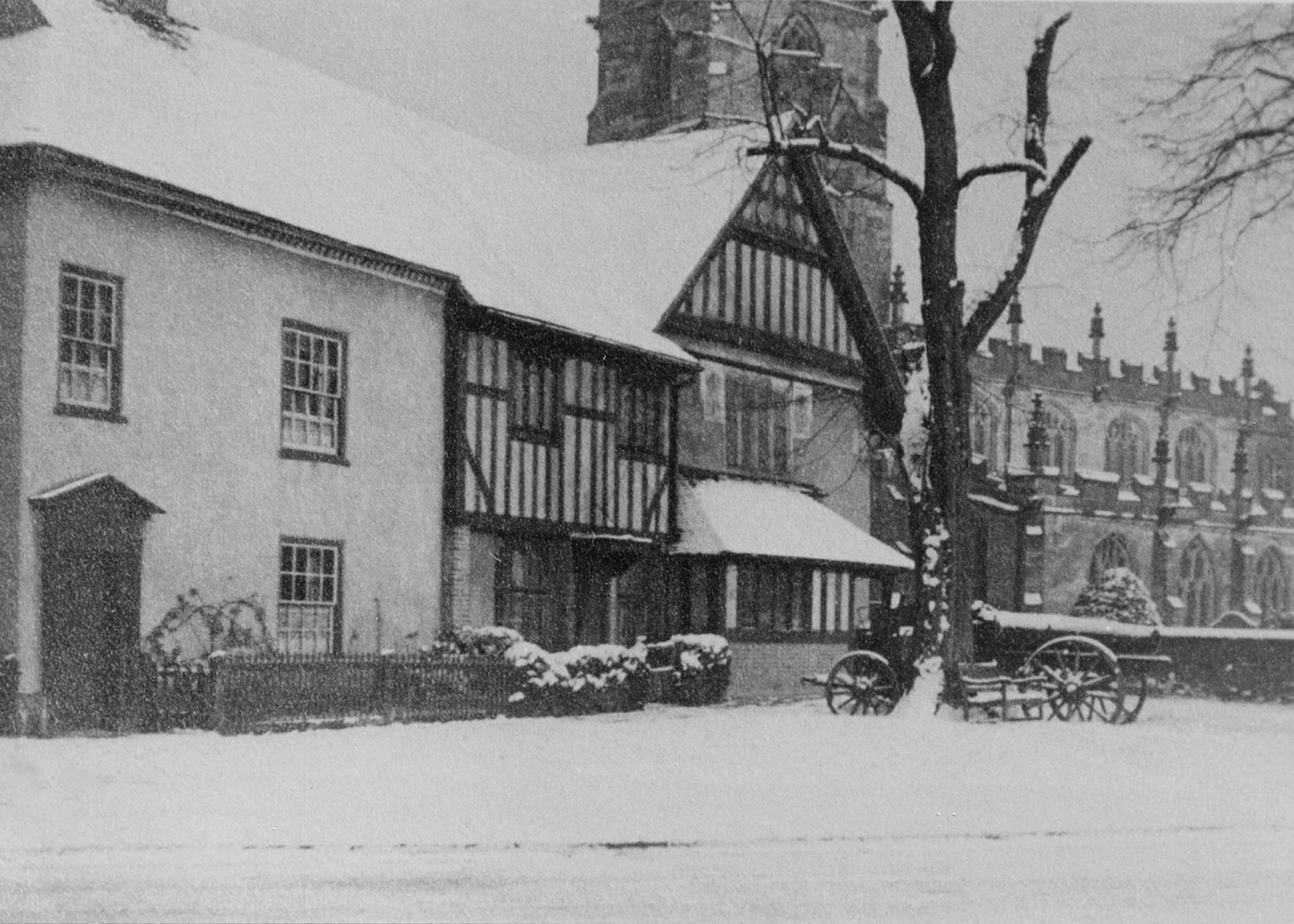
Knowle Parish Church continues to use the Guild House throughout the week for the benefit of its parishioners and the wider community.
Distinguishing Features
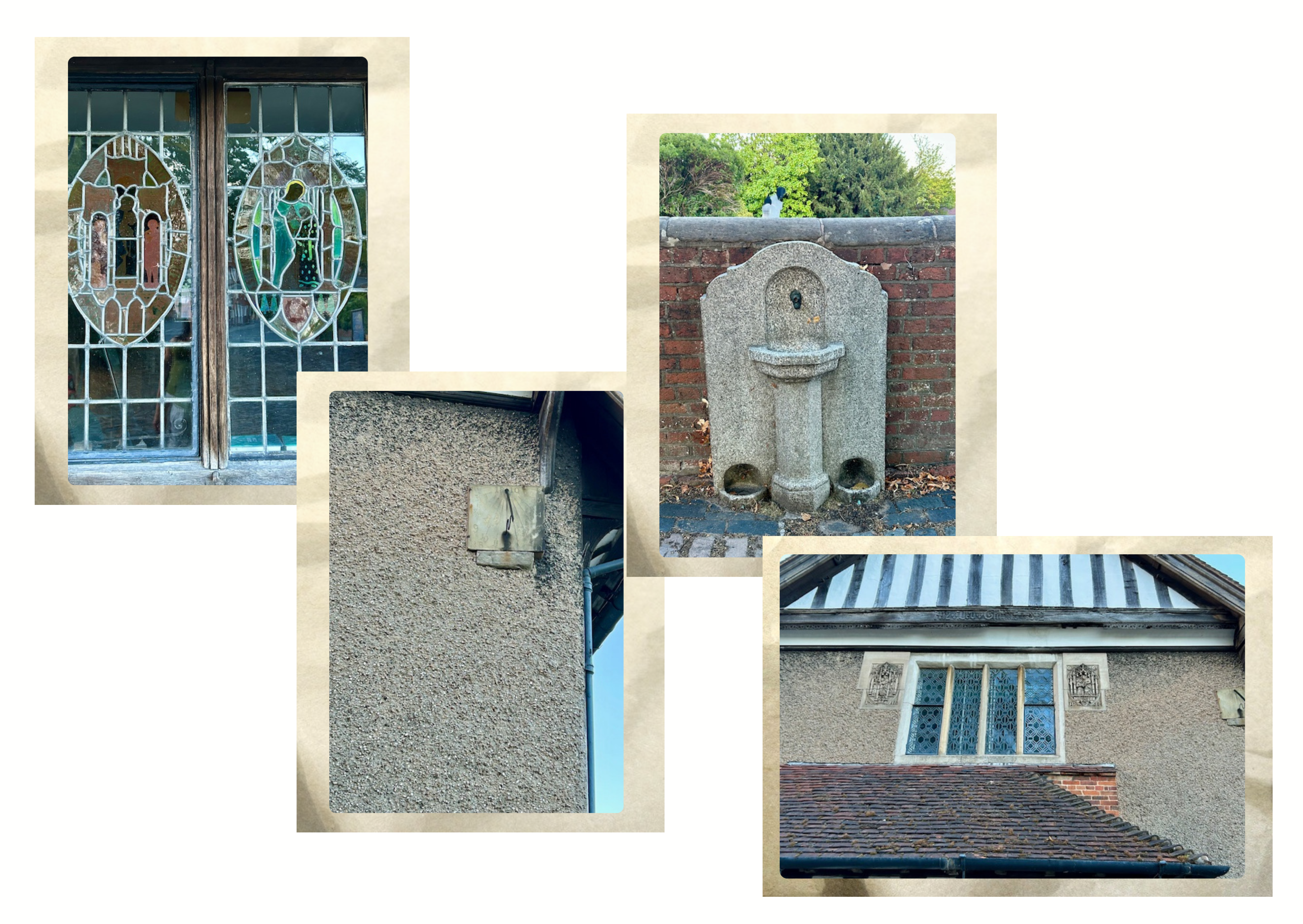
- Two plaques on the front wall of the Guild House depicting the seals of the Guild of St. Anne and the College of St. Anne. The left hand plaque shows the seal of the Guild of Saint Anne and depicts the three saints to whom the church is dedicated. The right hand plaque shows the seal of the college of St Anne and shows Anne, Mother of the Virgin Mary and the Virgin Mary
- The seals in the stained glass windows below the plaques
- The sundial on the top right of the front wall
- The water fountain in the church wall near the driveway. Why was it so low?
Timeline
- 1413: The King granted Walter Cook a license to found in Knowle a fraternity and guild in honour of God and of St Anne
- 1416: Walter Cook went on to found the College of Knowle
- 1547: Both the Guild and College were dissolved
- 1550: The building was sold and converted to housing
- 1700s: Occupied by Theophilus Boston
- 1810: Occupied by William Boston
- 1873: Converted to a shop and post office
- 1900: Drapers shop and newsagents
- 1911: Mr. George Jackson of Springfield House bought it together with the forecourt and St Anne’s cottage. He had it completely restored and anonymously gave it back to the church in 1912
- 1940-41: A shelter during night bombing raids
- 1944: A recreation station for American servicemen
- 1912: onwards – Meeting room for Knowle Parish Church
Image Gallery
You will be able to see more images of Knowle in the Local History Centre located upstairs in Knowle Library.
Explore the Trail
There are twelve buildings to explore on this trail.
The small print
While every effort has been made to ensure the accuracy of the information presented on this heritage trail, details may be subject to change or interpretation. To the best of our knowledge, all content is correct at the time of publication. We accept no responsibility for any errors, omissions, or changes that may have occurred since.