Foundations
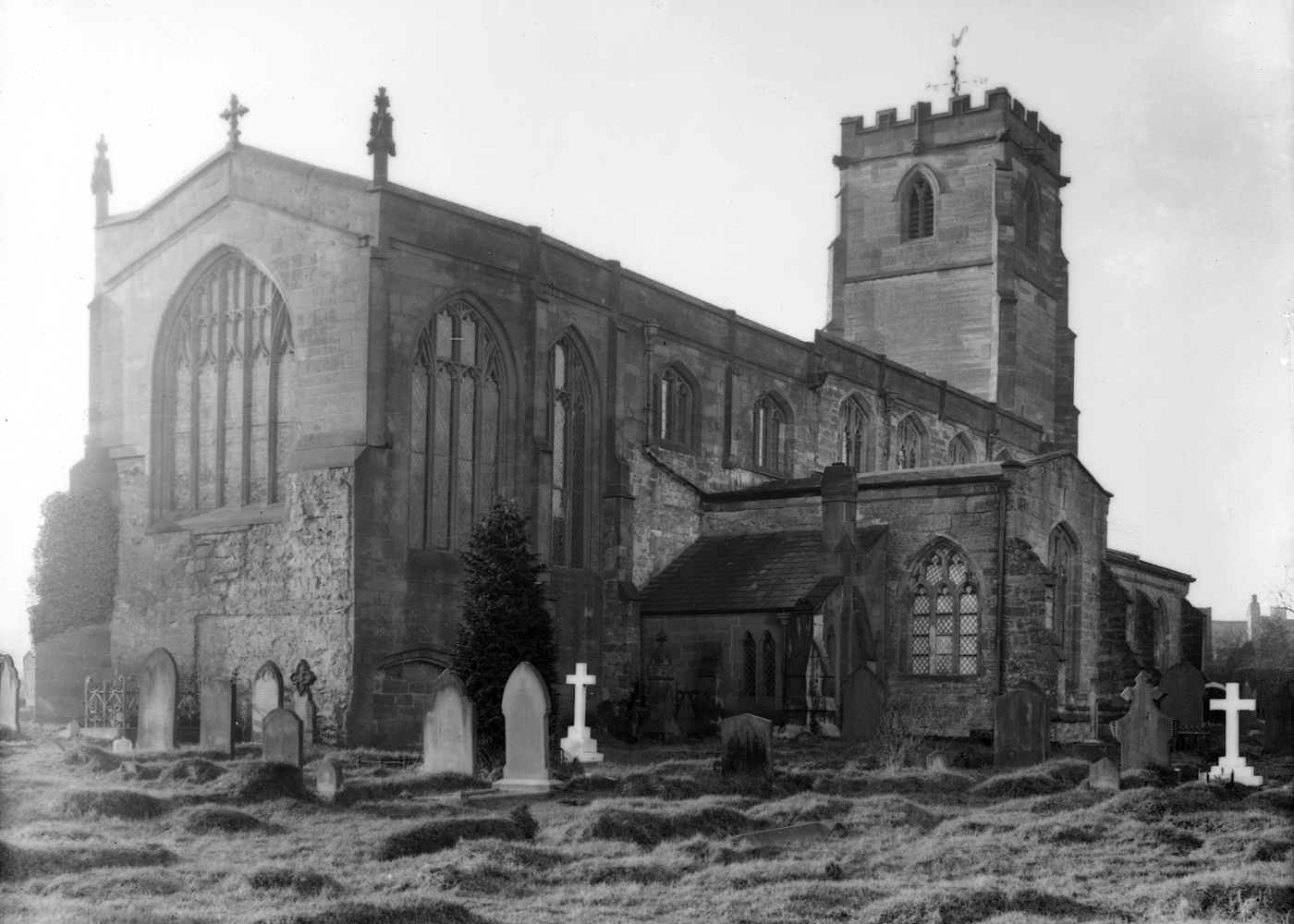
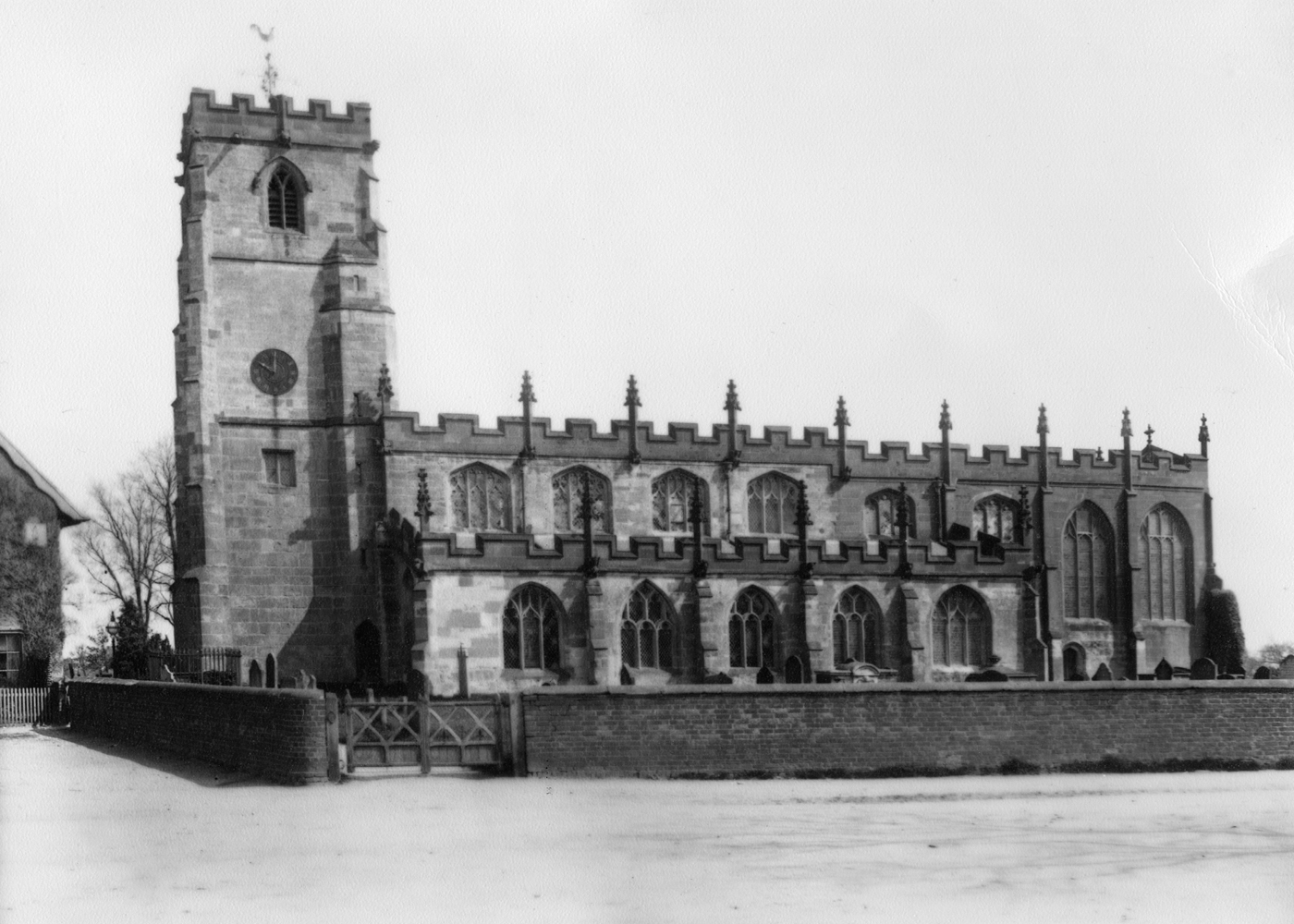
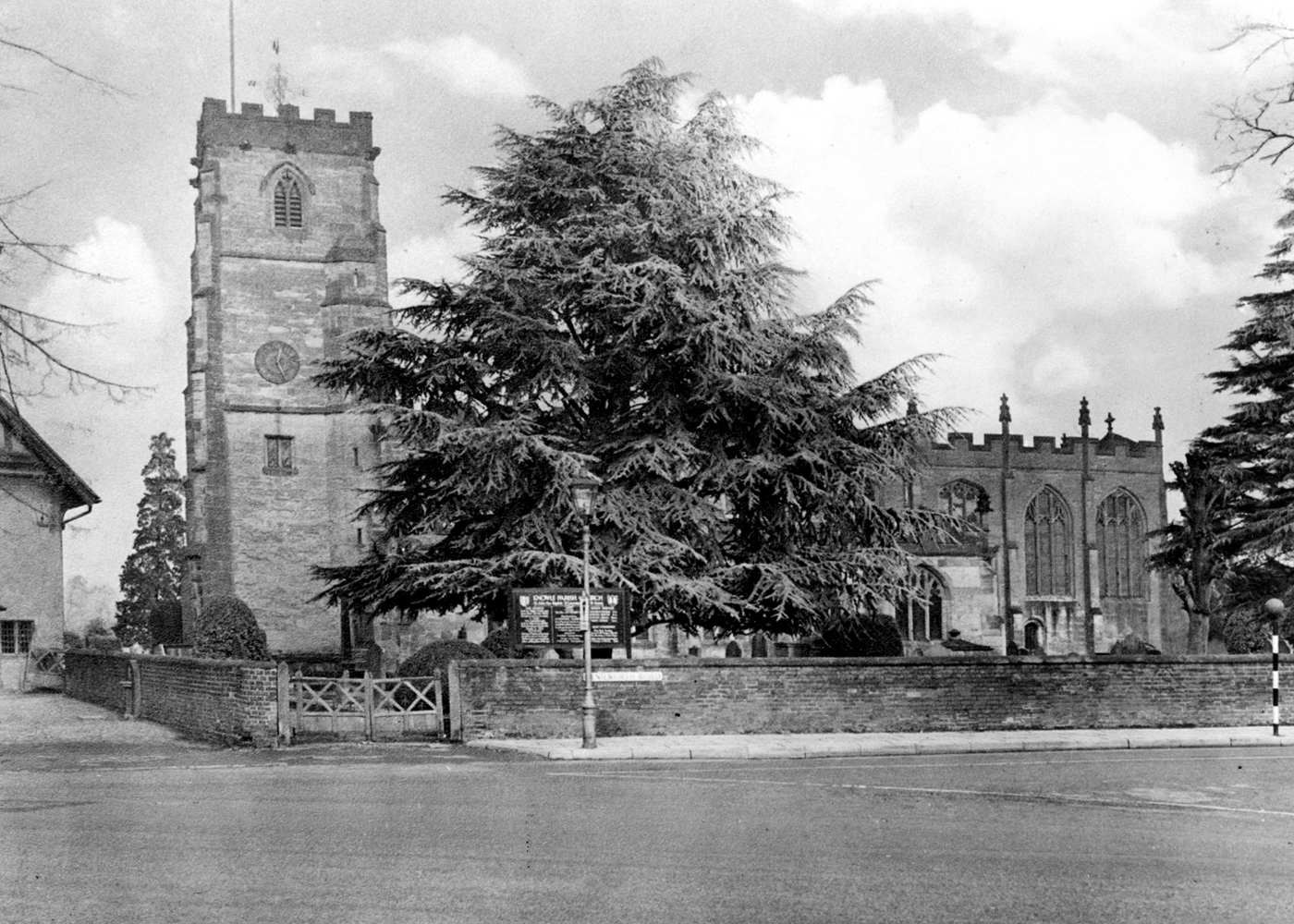
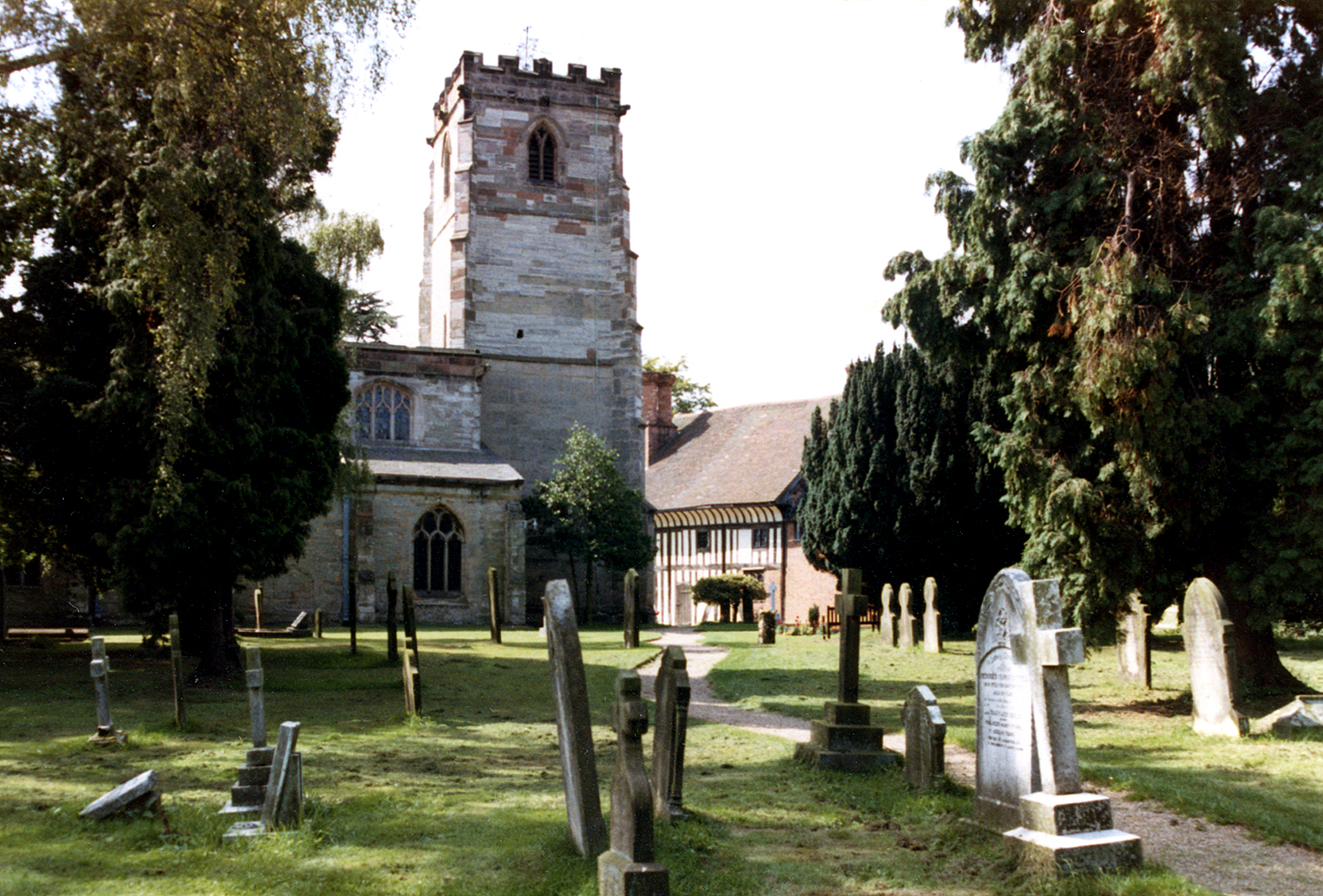
Grade 1 listed Knowle Parish Church was consecrated in 1403, and it is dedicated to three saints, John the Baptist, Lawrence and Anne. The founder of the church was Walter Cook, and the church was built on land owned by his family. The Northern, white sandstone face is the oldest part of the church which retains many of its early features, although it was extended three times and the interior extensively restored in 1860. The view of the embattled church with its tower is both striking and attractive.
Walter Cook, the founder of Knowle Parish Church was a local boy born in the 14th century who became a priest and won the favour of three English Kings and a Pope and became very rich. In 1396 William obtained permission from the Pope to found a church in Knowle on land owned by his family. It had a bell-cote, a font and a graveyard and permission to hold baptisms, weddings and funerals. It only took 7 years from obtaining permission to be built before the church was consecrated in 1403. Prior to this, Knowle villagers would have walked to Hampton in Arden to attend services, but in the winter frequent flooding meant the route was impassable.
The building
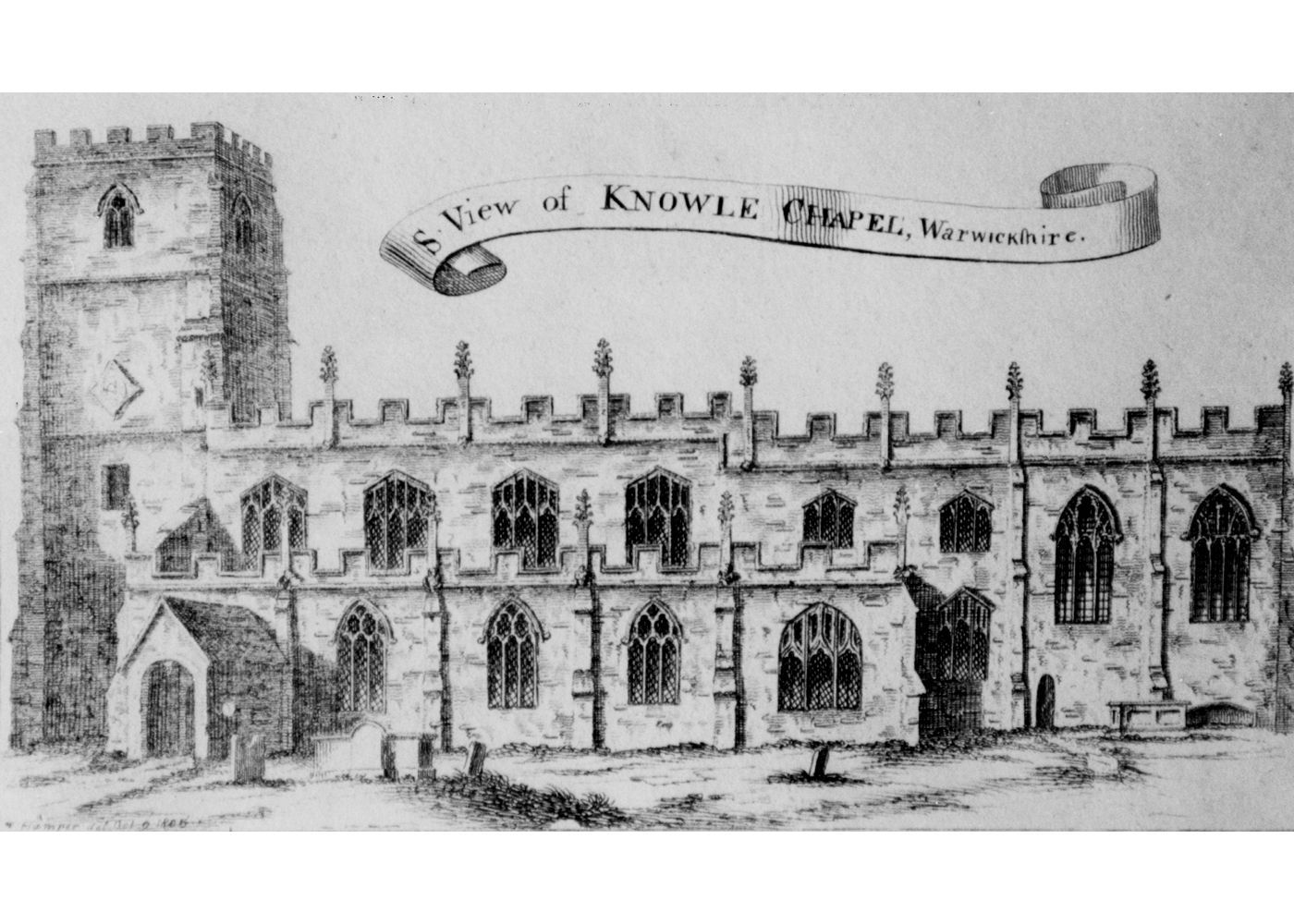
The church is perpendicular in style and the original church was built from local white sandstone which can be seen on the north side, the oldest part of the church.
The North transept was added shortly after it was built as a chantry chapel, and the tower replacing the original bell-cote may have been added at the same time. The chancel was extended eastwards, and the south aisle added a little later in red sandstone (probably around 1440). The exterior of the church has been relatively unchanged since then.
Around 1830 the former South entrance to the church [visible on the photograph] was removed and replaced with a new window and reconstructed wall. Though very, you can note slight differences between the new window and the four original south aisle windows. The bricks of the new wall can be seen under the new window.
19th Century Restorations
The interior was extensively restored in 1860 but still retains many original medieval features such as the 1402 font, the dugout chests and the Rood Screen and medieval carved misericords.
The rood screen (the richly carved screen that separates the nave from the chancel) dates from about 1480.
Modern features of the interior include the pews 1860, the stained glass mostly 19th and 20th century, the organ 1905, the pulpit 1927, and the recast bells in 1979. In 1921 the Soldiers’ Chapel, originally a chantry chapel and then a private family pew became a memorial chapel. It was dedicated to the men and women of Knowle who died in the First World War, and a stained glass window on the east side is dedicated to three Knowle men who died on the first day of the Battle of Somme. The chapel also remembers those who died in the Second World War and other conflicts.
The church is currently planning future changes and draft plans can be seen in the church.
Distinguishing Features
There are many interesting features inside and outside of Knowle Parish Church.
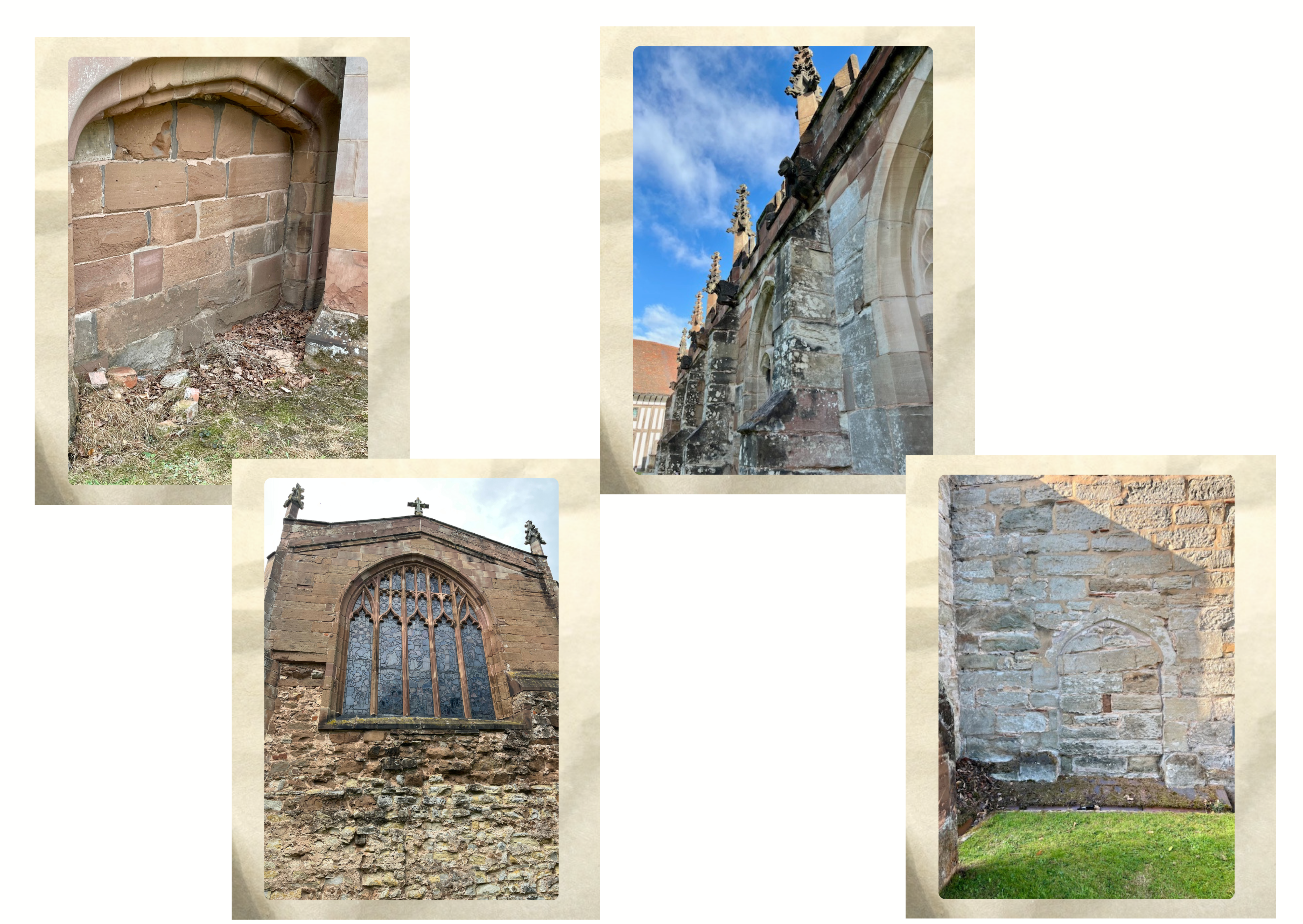
- The battlements, pinnacles and gargoyles on the south side
- The site of the former church entrance on the south side
- The memorial to Letticia Berrow
- Commonwealth War Graves
- The War Memorial, refurbished in 2018
- The medieval roof made from oak from the Forest of Arden
- On the east and south exterior church walls there are two former entrances, now filled in, that were the entry and exit to an old processional subway under the chancel floor.
- Bronze tablet dedicated to Walter Cook
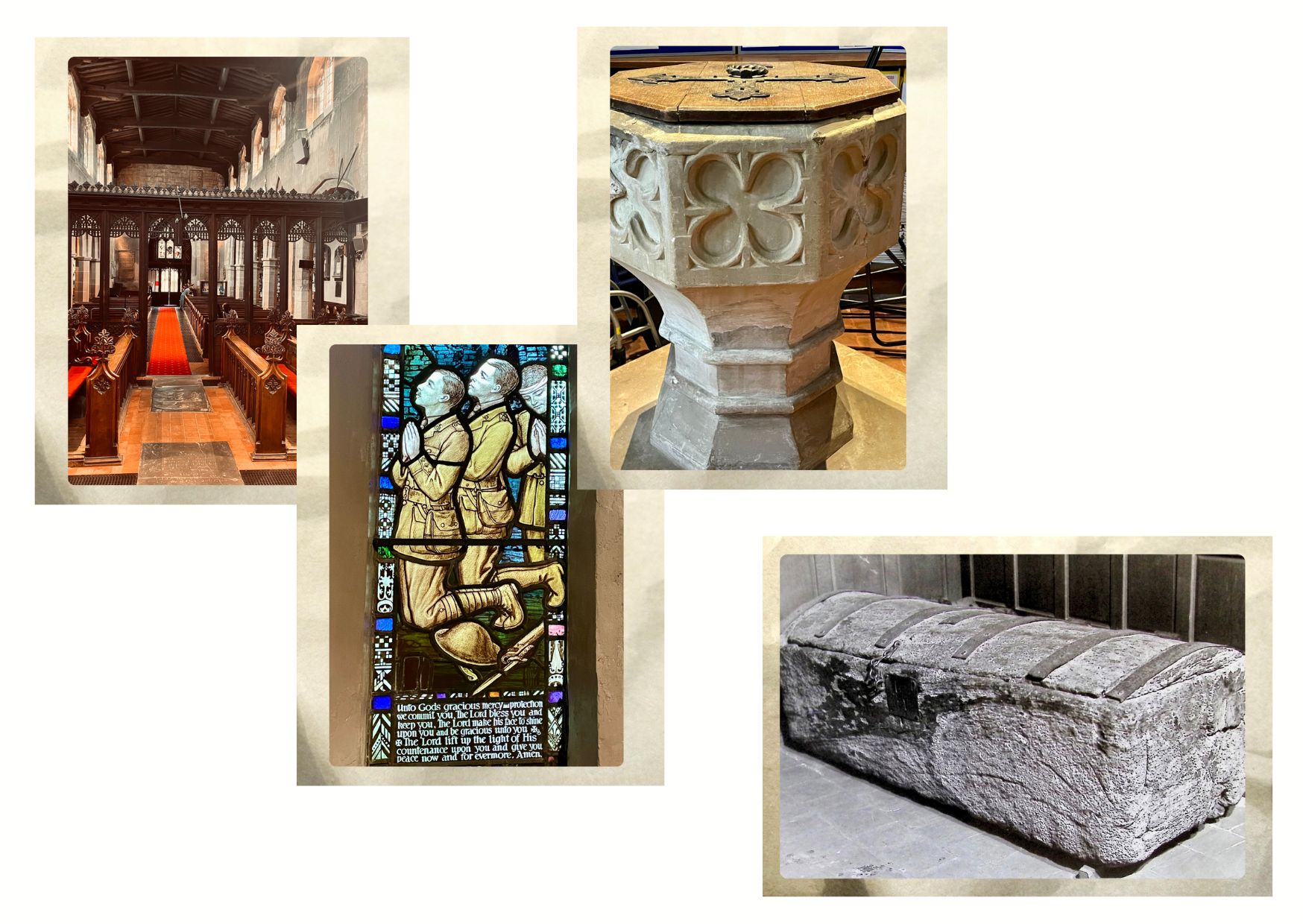
- The font dating back to 1402
- Two ‘dug out’ chests, thought to have been in the church since it was built
- The rood screen dating from circa 1480
- The Soldiers’ Chapel, dedicated as a war memorial in 1921 and the stained glass window in the soldiers’ chapel dedicated to three Knowle men who died on the first day of the Battle of Somme in 1916
Timeline
Over 600 years, the church has seen many changes, from extensions in the 15th century and 19th century to the installation of electricity in the 1920’s. Key dates include:
- 1396: Permission to found the church
- 1402: Font dates back to 1402
- 1403: Knowle Parish Church consecrated
- 1413: North aisle added & tower extended
- 1440: Chancel extended eastwards and the south aisle added a little later in red sandstone
- 1480: Year of origin of Rood screen
- 1830: Former south entrance blocked and the west door becomes the main entrance
- 1860: Interior extensively renovated by Rev. Canon Howe
- 1877: Stoneware rendered & damaged pinnacles removed
- 1899: New vestry and organ chamber added to north side
- 1921: Chantry Chapel dedicated as a war memorial
- 1927: Wiring installed for electricity
Image Gallery
You will be able to see more images of Knowle in the Local History Centre located upstairs in Knowle Library.
Explore the Trail
There are twelve buildings to explore on this trail.
The small print
While every effort has been made to ensure the accuracy of the information presented on this heritage trail, details may be subject to change or interpretation. To the best of our knowledge, all content is correct at the time of publication. We accept no responsibility for any errors, omissions, or changes that may have occurred since.